
Wednesday, July 5, 2023
Biden's Hydrogen Grab
In a perfect world, we and the European Union would be holding hands and skipping along doing this all cooperatively. Meanwhile, back in the real world...

Friday, June 30, 2023
Wednesday, February 22, 2023
Pumped Hydro Energy Storage
Interesting article about the current state of pumped hydro energy storage, where you pump water uphill while the sun is generating lots of power during the day and then let the water flow back downhill at night to generate electricity.
https://www.npr.org/2022/10/14/1126523766/water-batteries-could-store-solar-and-wind-power-for-when-its-needed
Introduction to Heat Pumps
MIT Review has a nice explainer about heat pumps. I learned something. Of course, that's a low bar.
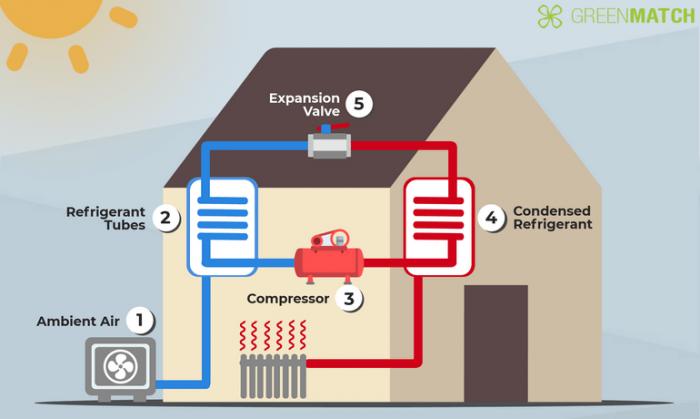
Monday, March 20, 2017
A Wall That Mexico Might Actually Chip In For
A poet and a professor from Mexico, writing in the Huffington Post, have proposed an alternative to Trump's border wall: a wall of solar cells to generate power all along the border.
Link: Instead Of Trump’s Wall, Let’s Build A Border Of Solar Panels
With solar plants along vast stretches of the almost 2,000-mile U.S.-Mexico border on the Mexican side, a new high-voltage direct-current (HVDC) grid could be set up to transmit energy efficiently from that long, snaking array to population centers along the border. HVDC power lines lose exponentially less energy over long distances than traditional power lines. Cities that could immediately benefit include San Diego, Tijuana, Mexicali, Tucson, Phoenix, El Paso, Ciudad Juarez, San Antonio and Monterrey.As they point out, there's lots of strong sunlight along the border and cities on both sides of the border could benefit. Let's try it.
Link: Instead Of Trump’s Wall, Let’s Build A Border Of Solar Panels
Friday, March 17, 2017
German Green Revolution Hurts Utilities Clinging to Coal and Gas
A report in Quartz about the economic effects of Germany's green energy revolution provides a stark warning to electrical utilities: start thinking about how you're going to handle the transition or face the consequences.
Yesterday, RWE confirmed a €5.7 billion loss in 2016 that it flagged a few weeks ago. Today, EON revealed a whopping €16 billion loss for the year, the largest in its history. Steep writedowns in the value of coal- and gas-fired power plants, along with the costs of cleaning up nuclear waste, were largely to blame for the shortfalls.Of course, in the story we find that these losses may be a sign that the German utilities are coming to grips with the transition.
Like RWE, EON recently split its renewables arm from its languishing fossil-fuel business.Link: Germany’s renewable energy push has forced $30 billion in losses on its biggest utilities
Thursday, March 16, 2017
European Union Ahead of Schedule on Renewable Energy Goals
A report in ClimateAction, a "partner" of the United Nations Energy Program, shows that the European Union is well on its way to meeting its 2020 goals for transitionaing to renewable energy.
Link: Renewable energy targets already met by 11 EU Members
Under the EU 2020 strategy, the region aims to reach a share of 20 per cent energy from renewable sources in gross final consumption of energy.
On Tuesday 14 March, the European Commission announced that for 2015 the share of energy from renewable sources in gross final consumption of energy reached 16.7 per cent in the EU, almost double the 8.5 per cent recorded in 2004.
Link: Renewable energy targets already met by 11 EU Members
Sunday, March 12, 2017
Wind Power Surpasses Hydro Power
An article in UtilityDive led me to a report from the U.S. Energy Information Administration showing that in 2016, the installed capacity of wind energy surpassed the installed capacity of hydroelectric energy for the first time. That milestone resonates with me as someone who has followed the growth of renewable energy for decades and was always depressed, early on, at how much of our renewable capacity was from hydroelectricity rather than solar or wind. But those days are now officially over.
Interestingly, for 2017, hydroelectric sources will still produce more actual electricity than wind generation.
Interestingly, for 2017, hydroelectric sources will still produce more actual electricity than wind generation.
Given the hydro fleet's historically higher capacity factors compared with wind and the expected strong hydrological conditions on the West Coast this year, such as the recent heavy rainfall in California and the Pacific Northwest, hydro generation in 2017 will likely still be higher than wind generation even with anticipated continuing additions of new wind capacity throughout the year.Link: U.S. wind generating capacity surpasses hydro capacity at the end of 2016
Telsa Powers Kuai
According to a story from Voice of America, Elong Musk is going to help the Hawaiian island of Kuai to reach a major, renewable-energy milestone: using solar power to provide night time electricity.
In the biggest project since it acquired the solar cell giant SolarCity, the Tesla company will build a 13-megawatt solar farm on the island of Kauai, covering more than 44 acres (18 hectares). The solar cells will charge a 53-megawatt hour battery station able to provide most of the island's power at night.Link: Solar Energy Station to Power Hawaiian Island
Tuesday, March 7, 2017
California's Glass was Half-Full Last Friday
Jeremy Deaton at Vox has the update on Calfornia's progress on solar electricity generation.
Link: California just hit an incredible solar power milestone
Around midday on Friday, demand reached around 29 Gigawatts (GW), while solar was providing nearly 14 GW of generation — some 9 GW from utility-scale arrays and another 5 GW or so from rooftops and parking lot canopies around the state.Deaton rightly celebrates the achievement, but then goes on to cover some of the challenges California faces in creating a solar economy.
Link: California just hit an incredible solar power milestone
Sunday, December 18, 2016
Scotland Advancing in World Renewable Energy Markets
The transition to renewable energy is going to drive the world economy for decades to come. If Trump was halfway serious about revitalizing American manufacturing, he'd be going all in on this. But as it is, countries like Germany and China, and now even Scotland, are pulling ahead of us.
The Aberdeen (Scotland) Evening Express has the story.
Link: Scotland’s ‘renewable energy expertise’ in demand worldwide, says new research
The Aberdeen (Scotland) Evening Express has the story.
“The stretching targets set in Scotland have meant our home-grown green energy industry has developed skills which are in demand on every inhabited continent, bringing investment and income to Scotland from across the world. Countries like Japan, Canada and Chile have seen the lead we’ve built up in wave and tidal energy and now employ Scottish organisations to advise them on developing their own marine energy resources."
Link: Scotland’s ‘renewable energy expertise’ in demand worldwide, says new research
Wave Energy Project in Ghana
Bianca Britton at CNN.com has the story on a new wave energy project off the coast of Ghana.
The thing I like about wave energy, speaking as a Californian, is that it is much less intermittent than solar or wind, and thus can provide much more reliable, 24-hour energy.
Link: Could waves become the next big renewable energy source?
The thing I like about wave energy, speaking as a Californian, is that it is much less intermittent than solar or wind, and thus can provide much more reliable, 24-hour energy.
The advantages of wave power, the company argues, is that their machines do not emit pollution, waves are more predictable than other renewable sources and despite the original set up being costly, the running and maintenance costs are low.
Link: Could waves become the next big renewable energy source?
California Net Metering Cap Kicks In
Everyone is trying to minimize this, but the net metering cap is just another attempt by Pacific Gas & Electric to slow down the pace of the solar transition. Not good.
Link: PG&E hits California net metering cap
In January, the California Public Utilities Commission approved new net metering rules to keep retail rate remuneration for energy exported to the grid, but added the connection fee and a non-bypassable monthly charge ranging from $0.02/kWh to 0.03/kWh, in addition to time-of-use rates. Those rates are up for review in 2019.
Link: PG&E hits California net metering cap
Friday, December 16, 2016
Priming the Pump of Renewable Energy Financing
My own opinionse on how to finance the renewable energy transition tend towards things like nationalizing the electrical utilities and then using the utility income to finance the change.
But for people hung up on market mechanisms, here is a story from Jan Ellen Spiegel at InsideClimate News about Connecticut's Green Bank and its mission to secure private financing for the transition.
Link: Does Connecticut's Green Bank Hold the Secret to the Future of Clean Energy?
But for people hung up on market mechanisms, here is a story from Jan Ellen Spiegel at InsideClimate News about Connecticut's Green Bank and its mission to secure private financing for the transition.
"Your goal is to get people into the real market where they can operate without government support or subsidy," said Esty, who is no longer commissioner. He believes industry, not government, should pick technologies. "The key role of government was to de-risk the flow of funds into clean energy."
Link: Does Connecticut's Green Bank Hold the Secret to the Future of Clean Energy?
Breakthrough Energy Ventures
I have some issues with Bill Gate's Breakthrough Energy Ventures fund. Gates seems to believe that we need a lot more research before we can make the transition to renewable energy. And I'm sure he's right that there are some mind-blowing technical breakthroughs ahead of us as we become a renewable energy society.
But we have sufficient technology in hand to push for implementation on a massive scale right now. And we need megawatts of renewable energy now, not twenty years in the future.
Tracy Staedter at Seeker has the report on what Gates and his supporters are doing.
Link: Bill Gates and Wealthy Allies Have Launched a $1B Clean Energy Fund
But we have sufficient technology in hand to push for implementation on a massive scale right now. And we need megawatts of renewable energy now, not twenty years in the future.
Tracy Staedter at Seeker has the report on what Gates and his supporters are doing.
Although the size of the fund is impressive, its duration is also a surprise. Whereas most investors want to see their startup companies turning a profit within a few years, those under Breakthrough Energy Ventures' wing will have 20 years to take the research and development time often necessary to push energy innovation to new levels.
Link: Bill Gates and Wealthy Allies Have Launched a $1B Clean Energy Fund
Tuesday, December 13, 2016
Growth in Solar Energy Strong for 2016 3rd Quarter
A lot of solar energy projects are starting to come online. Danielle Ola at PVTech has the story.
Link: US solar sees record-breaking Q3 2016, with Q4 to do even better
Whilst the third quarter may have broken records, the momentum is set to continue with even better figures in store for Q4. GTM Research anticipates that 4.8GW of utility PV projects will come online in the last quarter of the year; even more than was installed across the entire segment in all of 2015.
Link: US solar sees record-breaking Q3 2016, with Q4 to do even better
Solar Hydrogen in Gas Pipelines
A new project at the University of California, Irvine is looking at using our existing gas pipeline infrastructure to store and deploy hydrogen gas generated with electricity from renewable energy sources. Avery Thompson at Popular Mechanics has the report.
The project involves a technique called electrolysis, which uses electricity (in this case, electricity generated by the excess wind or solar power) to separate water into oxygen and hydrogen. ... The hydrogen can be compressed and injected into existing natural gas pipelines, where it is burned to generate electricity or heat. In this way, hydrogen acts as an efficient means of storing excess electricity generated by renewable sources.Link: How Simple Hydrogen Could Solve Renewable Energy's Biggest Problem
Cold Storage for Energy
Cryogenic energy storage is another contender in the race to find a way to store intermittent, renewable energy. Yasmin Ali at BBC News tells of a demonstration plant in Manchester, England, for his concept.
The cryogenic energy facility stores power from renewables or off-peak generation by chilling air into liquid form. When the liquid air warms up it expands and can drive a turbine to make electricity.Link: Cryogenic storage offers hope for renewable energy
The 5MW plant near Manchester can power up to 5,000 homes for around three hours.
Monday, December 12, 2016
Solar Has Repaid Its Fossil Fuel Debt
Megan Treacy at Treehugger reports on a new Dutch study that confirms that, even now, renewable energy systems do reduce the amount of greenhouse gases being released into the atmosphere.
Link: New study says solar panels have repaid their fossil fuel debt
By the researchers' calculations, for every doubling of global solar power capacity, the energy used to produce them fell by 12-13 percent and greenhouse gas emissions fell by 17-24 percent, depending on what material was used.
Link: New study says solar panels have repaid their fossil fuel debt
Renewable Energy and the Zombie Apocalypse
l always considered global warming to be a perfectly sufficient apocalypse scenario all on its own, but maybe not. The Fairfax Times of Virginia has the story of how a high school teacher uses zombies to put a little extra oomph into his class renewable energy projects.
Link: Zombie Survival Kit project helps students understand renewable energy resources
Students first learned about solar, wind, and water renewable energy sources. They were challenged to choose one of sources, research multiple designs for that energy source, and put it into practice. Students worked in groups to design the project, then were given a scenario that grabbed their attention: a zombie apocalypse. The scenario stated that all non-renewable energy sources had been wiped out. Their challenge was to develop a zombie survival kit that included the development of their chosen renewable energy source.
Link: Zombie Survival Kit project helps students understand renewable energy resources
Subscribe to:
Posts (Atom)